
It’s Time To Make A Change (Tip Below)
Change That Up is a complimentary newsletter that specializes in helping people improve their overall health and is sent out once each day.
You are receiving this email because you have expressed an interest in quality health tips. You can remove your email by clicking unsubscribe at any time.
To make sure you do not miss the next game changer add this email (support@changethatup.com) to your contacts and/ or safe senders list.
Here's Today's Tip... Why you should eat salmon.
There are a number of great reasons to consume salmon—besides the fact that, properly prepared, it’s quite tasty—and one of the most salient is that salmon can be an excellent source of omega-3 fatty acids, which have been shown to have brain and cardiovascular health benefits as well as beneficial effects on metabolism and body composition.
However, there’s a caveat here. You see, it’s not just about omega-3 fatty acids, as there is another type of essential fat that is pertinent to the discussion: omega-6 fatty acids.
Experts estimate that throughout human history the optimal ratio for consumption of omega-6 fatty acids to omega-3 fatty acids was about 1:1. With the contemporary diet, this ratio has shifted dramatically in favor omega-6 fatty acids to 20:1. While there are multiple explanations, including a decrease in omega-3 fatty acid consumption from freshwater fish, researchers attribute this in large part to the ubiquity of industrial vegetable oils (e.g., soybean, corn, safflower, sunflower oils) present in the Western diet as well as the consumption of meat and dairy from feedlot animals.
This is important for a number of reasons, especially when it comes to managing body weight and promoting a healthy inflammatory response. For example, omega-3 fatty acids have anti-inflammatory effects (e.g., suppress IL-1beta, TNF-alpha, and IL-6) whereas omega-6 fatty acids do not. What’s more, studies show that omega-6 fats promote inflammation, particularly when they are consumed in excess of omega-3 fats.
With the understanding and appreciation of the significance of balancing omega-6 and omega-3 acids, it’s now time to break the news as to why farmed salmon may be an inferior option compared to its wild-caught counterpart. Because farmed salmon are typically fed commodities like soy and corn, which have much higher concentrations of omega-6 fats compared to omega-3 fats, the fatty acid profiles of the salmon change markedly relative to wild-caught salmon, which feed on other omega-3-rich fish (e.g., sardines, anchovies) lower on the food chain.
The ratio of omega-3 to omega-6 fats (i.e., more omega-3 fats, fewer omega-6 fats) in wild-caught salmon is upwards of 266% higher than that of farmed salmon, which is lower in omega-3 and higher in omega-6 content. But that’s not all; farmed salmon also contain high concentrations of potentially health-damaging contaminants (e.g., PCBs, dioxins, chlorinated pesticides). Hmmm…fewer omega-3 fatty acids and more omega-6 fatty acids and contaminants; how does that sound to you? Not very good to us either.
To The Wild Salmon,
Change That Up
Bonus Tip... Speaking of fighting Inflammation...
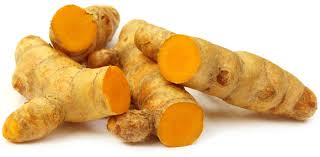 Turmeric has been proven to reduce or eliminate pain better than leading prescription medications. 1
A 2004 study published in the journal Oncogene 2 found that components of turmeric were effective alternatives to the drugs aspirin, ibuprofen, sulindac, phenylbutazone, naproxen and diclofenac,
to name a few.
The reason is because turmeric doesn’t just fight pain and inflammation, it does so much more. 3
How can one little root do so much?
Most researchers agree that the turmeric’s profound healing abilities can
be traced to its powerful anti-inflammatory action.
Full-spectrum turmeric (as opposed to an isolated curcumin extract) is especially effective because it operates by both mechanisms of anti-inflammatory action.
Most inflammatory foods, working in one of the following ways...
1. They neutralize inflammation causing free radicals in the body with a flood of antioxidants or
2. They stop the body from producing the chemicals that initiate inflammation in the first place (this is how aspirin and OTC pain meds work)
What is unique about turmeric is that it combats inflammation through both of these mechanisms.... simultaneously! Its multi-pronged approach allows it to work wonders for aches, pains, and arthritis
(by stopping inflammation at the source), while also strongly supporting the immune system with antioxidants.
And because nearly all diseases and ailments can be traced back to inflammation and oxidative stress…it seem like there’s almost nothing that turmeric can’t heal.
But not all forms of turmeric are created equal…
Most of the turmeric supplements you see in stores come in the form of encapsulated powders. The truth is with turmeric powder you may be
getting very little actual benefit.
Turmeric powder has a fairly low bioavailability (meaning that a good portion of it isn’t properly absorbed by your body), it often isn’t very fresh, and it’s sometimes made with harsh processes that can destroy or degrade turmeric’s healthful components.
Because turmeric is hard to absorb, it must be formulated in a certain way allowing the body to absorb and utilize its entire spectrum of nutrients.
There's another NEW form of turmeric that actually tastes amazing AND is easy to absorb...
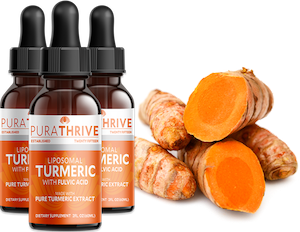 PuraTHRIVE Organic Turmeric Extract is an outstanding full-spectrum extract that’s “liposomalized”—meaning it’s specifically blended to make the turmeric bind to phosphlipids (fats) that increase its bioavailability 10 to 20 times!
This formulation takes all that raw turmeric has to offer and presents it in a format that your body LOVES to consume.
==> Give this truly revolutionary product a try… you won’t believe how quickly you feel its effects. Once you do, you’ll wonder why you didn’t make turmeric a part of your daily life a long time ago.
To A Better Lifestyle.
References:
1. Analgesic Efficacy and Safety of Curcuminoids in Clinical Practice: A Systematic Review and Meta-Analysis of Randomized Controlled Trials: Pain Med. 2015 Dec 14. Epub 2015 Dec 14. PMID: 26814259
2. Green Med Info: http://www.greenmedinfo.com/blog/science-confirms-turmeric-effective-14-drugs
3. Zingiberaceae extracts for pain: a systematic review and meta-analysis: Nutr J. 2015 ;14:50. Epub 2015 May 14. PMID: 25972154